



 Newsletter
 Online Store
 Login
Login


Race Coverage

RACE Coverage
QUICK FACTS
The Gobi March (Mongolia) begins on 20 June 2027 and finishes on 26 June 2027. It is a 250-kilometer / 155-mile, seven-day / six-stage ultramarathon and the 21st edition of the race.
Competitors arrive in Ulaanbaatar on 18 June; check in and transfer to Camp 1 on 19 June; race from 20 to 26 June; and celebrate at the awards banquet on 26 June. An UltraLite (Mongolia) option runs alongside the Gobi March on the same dates.
The Gobi March (Mongolia) is part of RacingThePlanet’s 4 Deserts Ultramarathon Series, which TIME magazine named one of the Top 10 Endurance Competitions in the world in 2010. Finishing the Gobi March also counts toward qualification for The Last Desert (Antarctica).
Competitors from around 40 countries take part. The 2026 race had 158 competitors (132 in the Gobi March and 26 in UltraLite) from 40 countries, aged from under 20 to 71. 36% were women and 65% were racing with RacingThePlanet for the first time.
Approximately 20% of competitors run the entire course, 60% combine running with walking, and 20% walk the entire course. The fastest completion time is expected to be around 24 hours and the slowest around 70 hours.
The fastest finish time on any Gobi March course was set by Ho Chung Wong of Hong Kong with an overall time of 20 hours and 34 minutes in 2018.
In 2026, Elise Lagerstrom became the first woman in the race’s 20-year history to win the Gobi March overall, beating every man in the field.
The six Stages cover 35, 45, 40, 80, 40 and 10 kilometers. Stage 4, the 80-kilometer Long March, spans two days with an overnight checkpoint offering a campfire, hot water and rest.
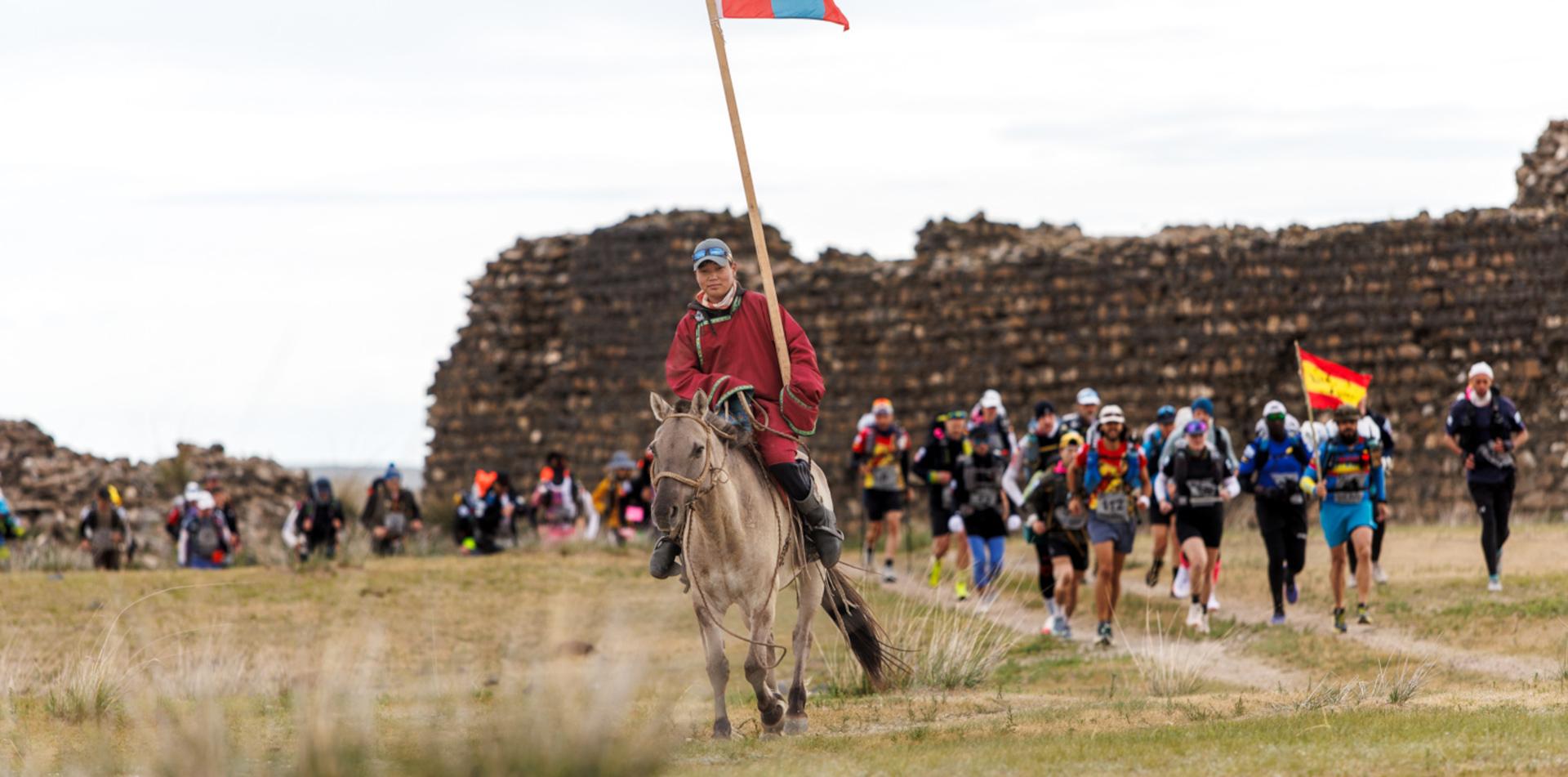
The course follows the footsteps of the Great Genghis Khan. It starts at the Khar Bukh Balgas Fortress, around 360 kilometers west of Ulaanbaatar. It then passes stupas, temples and traditional ger villages before ending in Karakorum, the capital of Genghis Khan’s Mongol Empire from 1235 to 1260, on the vast steppe.
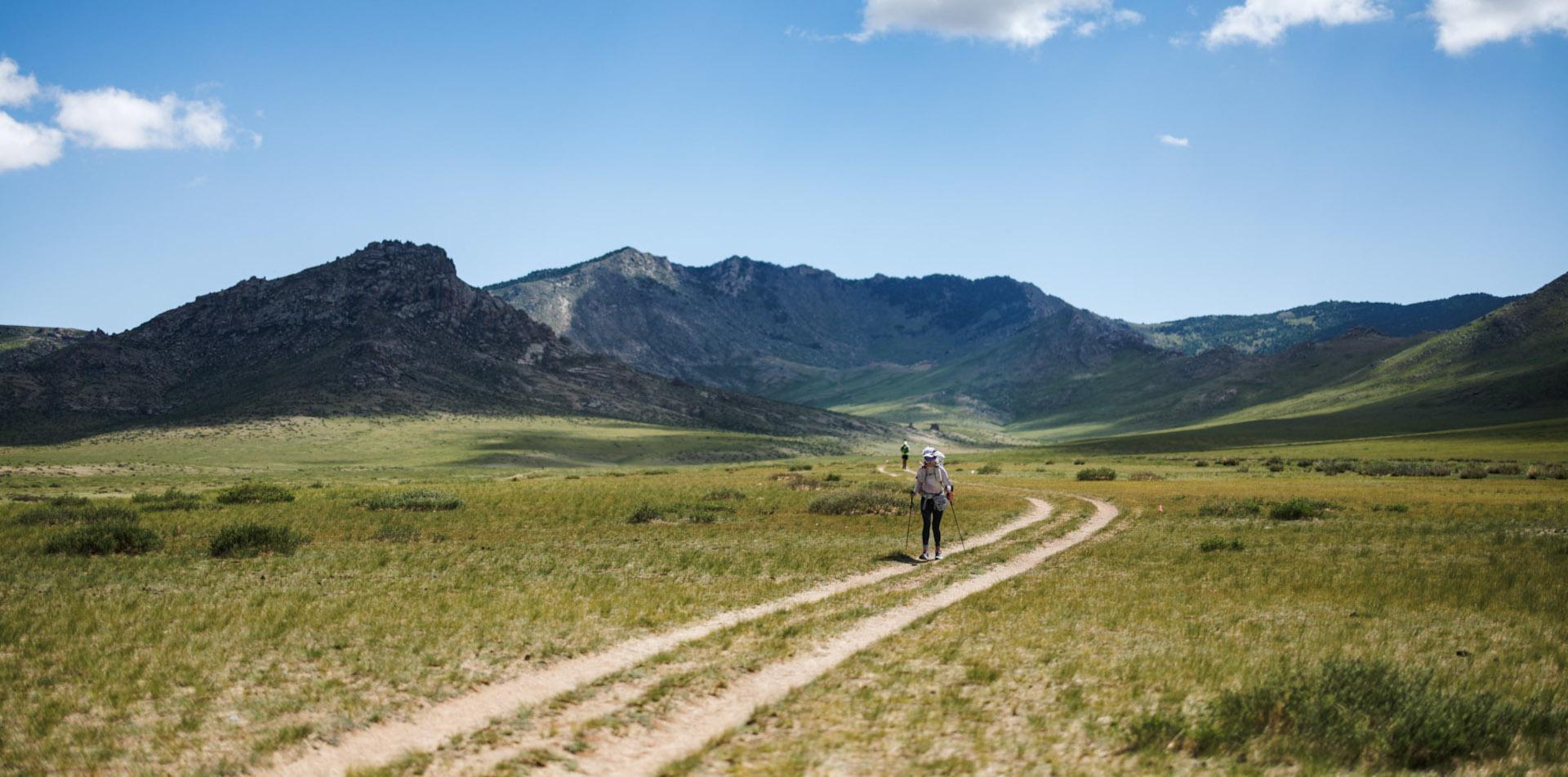
Along the course, competitors pass through the UNESCO World Heritage Orkhon Valley Cultural Landscape. The terrain is a mixture of open grasslands, soft sand and dunes, rocky mountains, nomadic farmlands, great rock valleys, old forests, riverbeds, river crossings and heritage sites. The course climbs about 4,461 meters and descends about 4,052 meters, at altitudes between 1,015 and 1,765 meters.
Competitors must pass through up to 30 checkpoints before crossing the finish line. Checkpoints are around 10km / 6 miles apart and offer water, shade and medical support.
Competitors must carry all mandatory items in their backpack – see the equipment list. The average pack weighs 9 kilograms / 20 pounds.
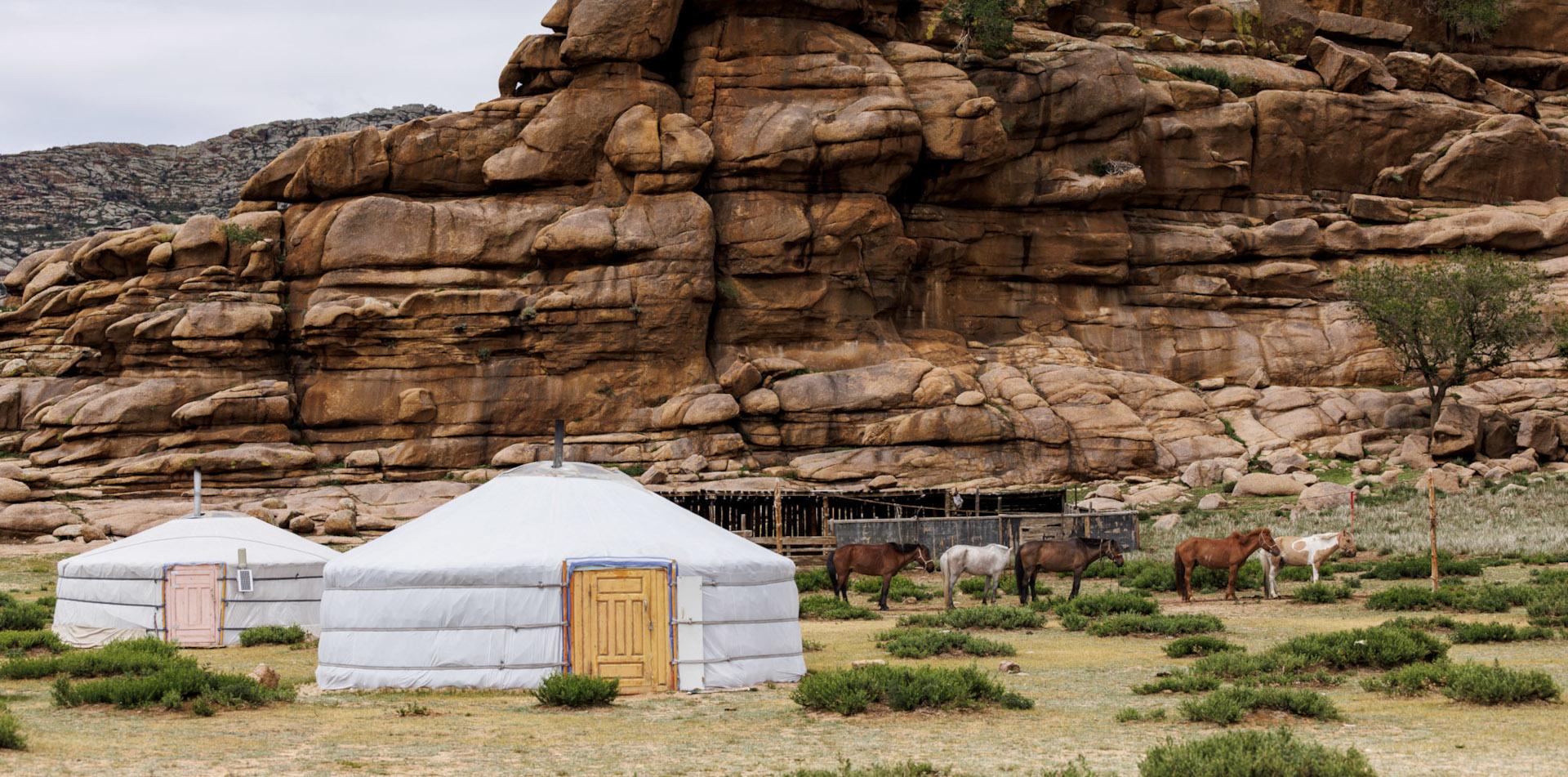
Competitors sleep in shared tents and, at some camps, in traditional Gers (yurts).
Laptops and tablets are available in specially designated CyberTents and CyberGERs so competitors can write blogs and exchange emails during the race. This is their only contact with the outside world during the week.
Competitors, volunteers and staff are expected to consume up to 15,000 liters of water in total.
Many competitors raise money and awareness for charities around the globe through their participation.
RacingThePlanet donates specialised lithium batteries to nomadic families living along the course. These batteries power water pumps, small refrigerators and mobile phones, improving daily life for these families. RacingThePlanet also supports projects at the Erdene Zuu Monastery, built in 1585 and one of the earliest surviving Buddhist monasteries in Mongolia. Competitors and volunteers are encouraged to bring colouring books, pens and pencils, which are distributed to children along the route.
Ulaanbaatar, the capital and host town, is home to about 1.8 million people, nearly half of Mongolia’s population. At 1,350 meters, it is often called the world’s coldest capital by average annual temperature.
The climate in Mongolia in June is typically dry, but there can be a few rainy days. Daytime temperatures are likely to range between 10 – 25°C / 50 – 77°F. They could drop to -2°C / 28°F at night.
Mongolia is known as the “Land of the Eternal Blue Sky”, earned from an average of 250 days of blue sky each year (but don’t be fooled, a blue sky does not always mean high temperatures).
Mongolia is the world’s most sparsely populated sovereign country. It has more than 60 million horses, cattle, camels, sheep and goats for about 3.6 million people. Roughly 30% of Mongolians still live a nomadic or semi-nomadic life, and competitors will experience this culture in its natural form at the nomadic farms along the course.
Mongolia’s biggest celebration is the Naadam Festival, held every year from 11 to 13 July, just after the race. It features Mongolian wrestling, horse racing and archery, known as the “three games of men”, and is on UNESCO’s Intangible Cultural Heritage list.